
Through the two rounds of our Research Call, the CHAI Hub has funded numerous innovative, collaborative research projects that seek to advance causal AI for healthcare. These projects bring together interdisciplinary teams to address real clinical challenges, develop trustworthy AI methods, and create tools that can be translated into meaningful healthcare impact.
Supported Projects & Success Stories
Round 2 Funded Projects
Project Title: Identification of causal optimal treatment strategies in management of cardiovascular disease in type 2 diabetes mellitus using real-world data
Summary: Cardiovascular disease affects 7.6 million people in the UK and is a leading cause of death worldwide. People with Type 2 diabetes are at higher risk of heart attacks and strokes. In recent clinical trials, newer treatments (e.g., GLP-1s) have shown protective effects, but such trials do not always reflect everyday healthcare. We will use large-scale NHS England data to understand how well these treatments work in routine clinical practice and to identify which patients are most likely to benefit causally from each treatment. This will help doctors and regulatory policymakers make more personalised treatment decisions to improve health outcomes. This project is a collaboration with Kaiser Permanente Northern California Division of Research and UC Berkeley’s Center for Targeted Machine Learning and Causal Inference (CTML). The methodology for this study will provide input to an ongoing collaboration with the National Institute for Health and Care Excellence (NICE) in developing a checklist for Causal Inference best practices for reliable Real-World Evidence generation.
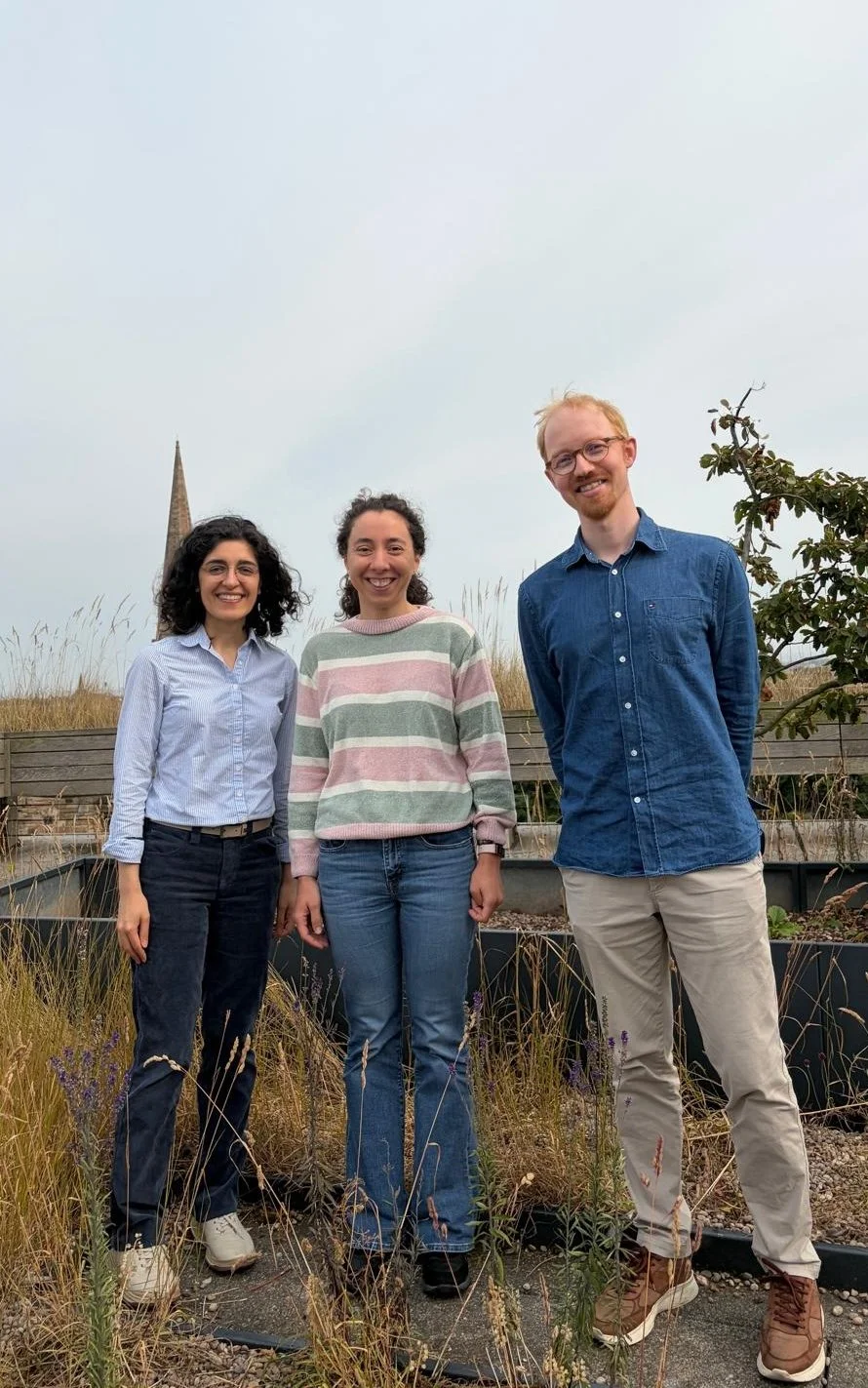
Co-Principal Investigators: Dr Ava Khamseh, Dr Alina Kumukova, Dr Sjoerd Beentjes,
Co-Investigators: Prof Amitava Banerjee
Project Title: Piloting the use of Targeted Maximum Likelihood Estimation for causal inference and federated analytics

Dr. Daniel morales, project leadSummary: This project explores new ways to learn from real-world healthcare data, such as electronic patient records, to better understand the safety of medicines. We will test an advanced statistical method called TMLE that combines machine learning with causal reasoning to study how treatments affect patients. First, we will develop and test the method using synthetic (artificial) health data. Then, we will apply it to a real drug safety study and compare it with current approaches. By working with medicines regulators, the project aims to improve how evidence is generated and used to make safer, more reliable healthcare decisions about medicines.
Project Title: REACH: Reconfiguration of Emergency Care – A Causal Healthcare Model

Dr Ana Paula Palacios, project lead bASED AT THE University of GreenwichSummary: Healthcare systems are under increasing pressure to deliver timely emergency care while responding to growing demand and major service reconfigurations. In Shropshire, Telford and Wrekin, planned changes to emergency and hospital services will alter where patients receive care, with important implications for ambulance services, emergency departments and patient outcomes. We will develop a novel causal inference framework that combines NHS operational data with advanced Bayesian modelling to estimate how proposed service changes will affect patient pathways, ambulance demand, travel times and hospital pressures before they are implemented. By quantifying uncertainty and identifying the causal impact of different reconfiguration scenarios, the project will provide transparent evidence to support healthcare planning and policy decisions. This collaborative project brings together researchers from the University of Greenwich and partners at NHS Shropshire, Telford and Wrekin Integrated Care Board and The Shrewsbury and Telford Hospital NHS Trust to improve operational planning for emergency healthcare services.
Project Title: TRUST-PE: Transparent, Reliable, and Unbiased Solution for Pulmonary Embolism Detection and Surgical Planning
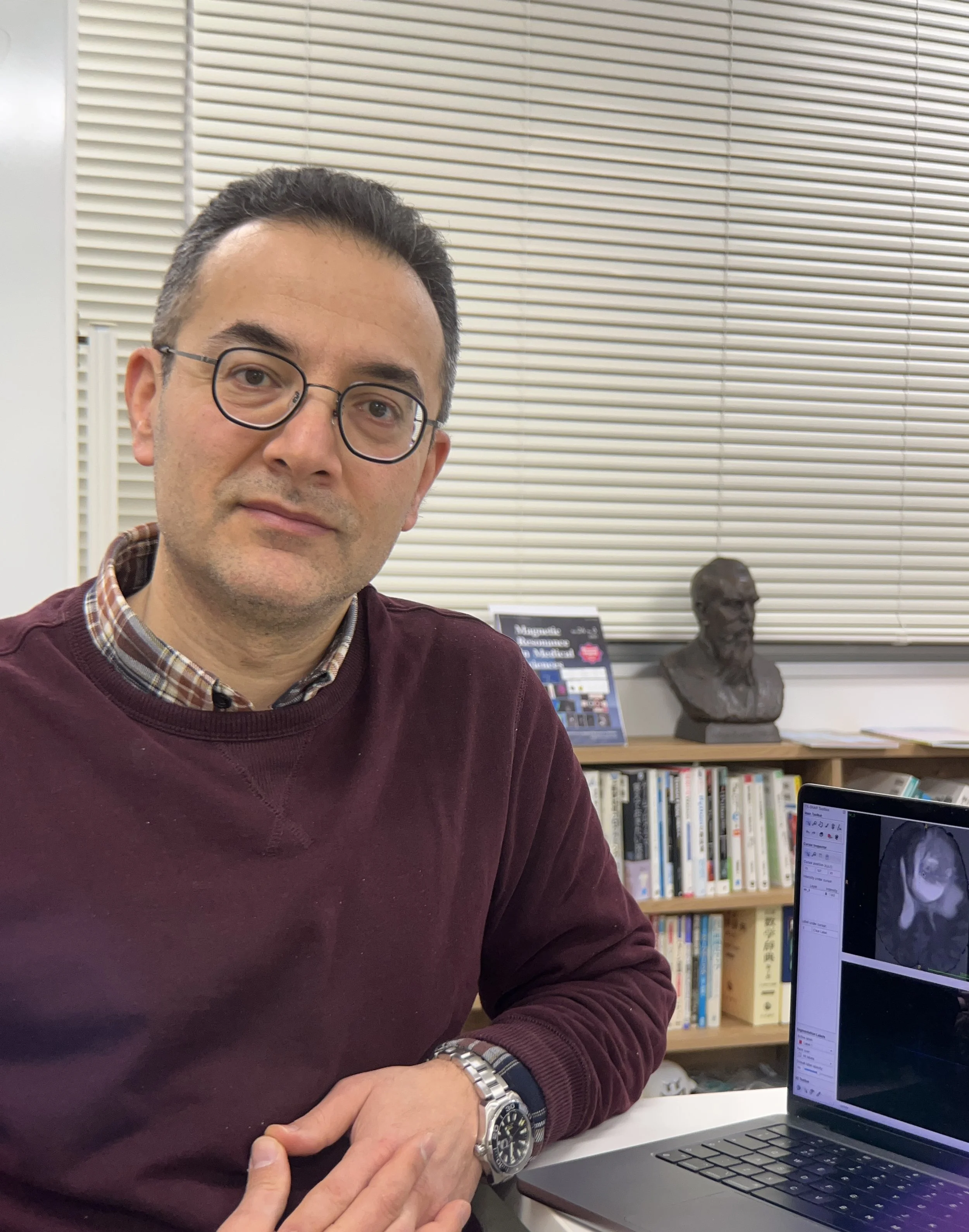
Dr. aLI GOOYA, project lead BASED AT THE UNIVERSITY OF GLASGOW
Dr Judith R Harrison, project lead BASED AT the Newcastle University
Summary: Pulmonary embolism (PE) kills thousands of people each year and is often missed or diagnosed too late. We have developed an AI system that precisely detects and segments blood clots in the pulmonary arteries, and generates distance maps and potential surgical routes to guide catheter-based treatment. In contrast, existing commercial tools primarily provide patient-level severity assessments based on broad cardiac measurements and do not offer this level of anatomical and procedural detail. Our system achieves state-of-the-art performance in pulmonary artery and clot segmentation and, to our knowledge, is the first to generate both distance and surgical route maps for catheter-guided intervention. However, its performance can deteriorate when applied to data from new scanners, hospitals, or imaging protocols due to domain shift. TRUST-PE will address this limitation by developing innovative causal AI methods to make our existing pipeline robust to distribution shifts across hospitals, scanners, and acquisition protocols. We will continue our collaboration with the Scottish Pulmonary Vascular Unit at Golden Jubilee University National Hospital, which will lead clinical validation and help translate the technology into real-world patient care.
Lead Applicant: Dr Ali Gooya
Co-Applicant: Prof Alistair C Church
Researcher: Mr Abuzar Rezaee
Project Title: Causal AI to identify potentially modifiable dementia risk factors after midlife psychiatric multimorbidity
Summary: People with multiple mental health conditions in midlife are at increased risk of developing dementia, but it is not clear which aspects of treatment or care might actually influence that risk. Conventional observational analyses can identify associations, but these may be distorted by differences in illness severity, treatment selection or early symptoms of dementia.
We will use causal AI methods with large-scale, anonymised mental healthcare records enriched using natural language processing. We will build explicit causal models and test methods including causal weighting and target-trial approaches to investigate potentially modifiable treatment and care factors while accounting for key sources of bias.
The project will establish which causal questions can be answered reliably using complex real-world psychiatric data, and identify the most credible targets for future dementia-prevention research in people with psychiatric multimorbidity.
Round 1 Funded Projects
Project Title: CAn-TaCKLE

Dr. Thomas sawczuch, project leadSummary: There is growing societal concern surrounding the relationship between long-term negative brain health outcomes and repeated head impacts in sport. To mitigate this risk, law changes are being made by policy makers, but these tend to be based on observational/descriptive research, which may fail to capture any unintended consequences, or law trials, which are useful but costly and impractical at the highest levels of competition.
The tackle event accounts for more than 98% of head impacts in rugby league, so identifying potential policy changes which can make the tackle event safer would be considerably beneficial to the sport and its participants. The CAn-TaCKLE project (Causal Analysis of Tackle and Contact Kinematics, Load and Exposure) aims to understand the causes of head impacts within the tackle event in rugby league, so the effect of policy changes can be evaluated without the use of law trials.
The project will use AI software (Causal Jazz) to learn the causal relationships between different elements of the tackle event and then simulate potential policy changes and the extent to which they would reduce the number of head impacts experienced by players. The results will be presented to the Rugby Football League (RFL) to help achieve their goal of "reducing sub-concussive head impact exposure by 30%" before 2029.
Project Title: Causal Survival Models for Psychosis: Insights into Risks and Prognosis

Fani Deligianni, project leadSummary: Our project aims to improve how we understand the effects of medications for psychosis.
Currently, doctors rely on clinical trials, but these don't capture the complexity of real-world patients. We're developing advanced mathematical models that can identify true cause-and-effect relationships in patient data, rather than just associations. By analyzing records from 2,000 Scottish patients over 10 years, we'll create tools that help predict both the benefits and potential side effects of different treatments for individual patients. This research could transform how treatments are selected, improving outcomes and reducing harmful side effects for people living with psychosis.
Principal Investigator: Fani Deligianni, University of Glasgow (fani.deligianni@glasgow.ac.uk)
Clinical Collaborators: Samuel Leighton, NHS Greater Glasgow& Clyde, Rajeev Krishnadas, University of Cambridge
CHAI Collaborators: Damian Machlanski, Sotos Tsaftaris, University of Edinburgh
Project Title: CausalGene: glucocorticoid effects on human airway cells through population of causal graphs

Anna Calissano, PROJECT LEADSummary: 1% of the population worldwide receives long-term oral type of steroids called glucocorticoids. 40% of those treatments are taken by patients with respiratory diseases including asthma, which affects around 300 million people worldwide. However, how glucocorticoids work at the molecular level is not fully understood, causing many undesired effects. CausalGene aims to unveil how the gene expression of lungs cells changes upon administration of glucocorticoids.
To understand the causal effects of glucocorticoids on cells reprogramming, CausalGene combines methods from causal discovery and graph theory to reveal novel molecular mechanisms governing glucocorticoid cellular activity and to start designing better anti-inflammatory drugs.
Project Title: Using artificial intelligence to discover new valid Instrumental Variables for causal healthcare research
Summary: Instrumental Variables (IVs) are a powerful tool in observational research for answering cause-and-effect questions, such as evaluating the safety and effectiveness of different treatment options. Their appeal lies in the ability to produce consistent estimates of average treatment effects, even in the presence of unmeasured confounding. However, identifying a valid IV depends on complex assumptions about the data structure, many of which cannot be fully tested using the data alone and require in-depth subject-matter expertise.
This project is a proof-of-concept study evaluating a previously proposed machine learning algorithm designed to identify valid candidate IVs and covariate sets that satisfy the necessary assumptions. We will assess whether this algorithm can successfully identify new valid IVs in a large UK primary care dataset, focusing on healthcare application studies for type 2 diabetes management and stroke prevention. This is a collaborative work between the University of Exeter, University of Bristol, Royal Devon University Healthcare NHS Trust and University Hospitals Plymouth NHS Trust.